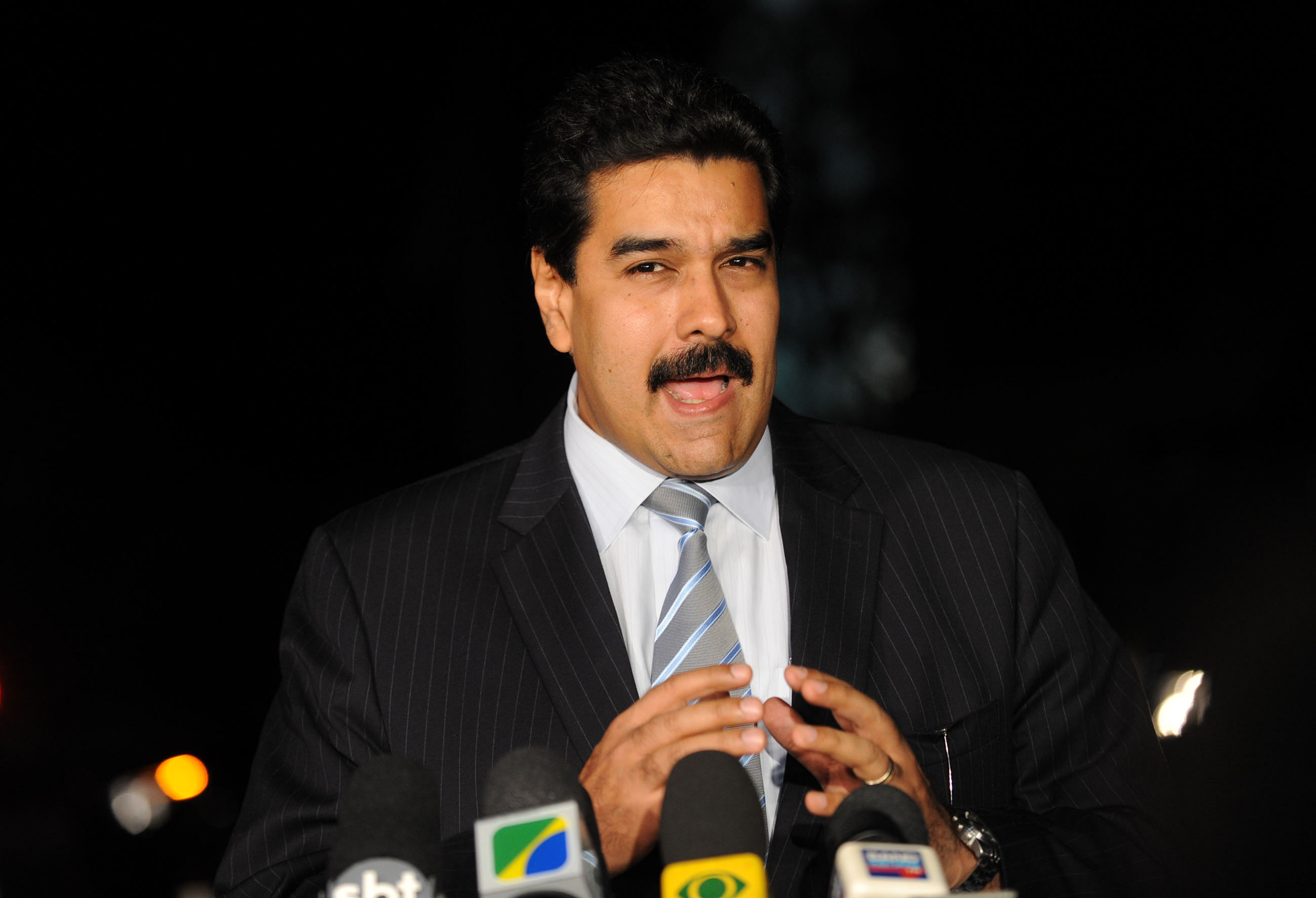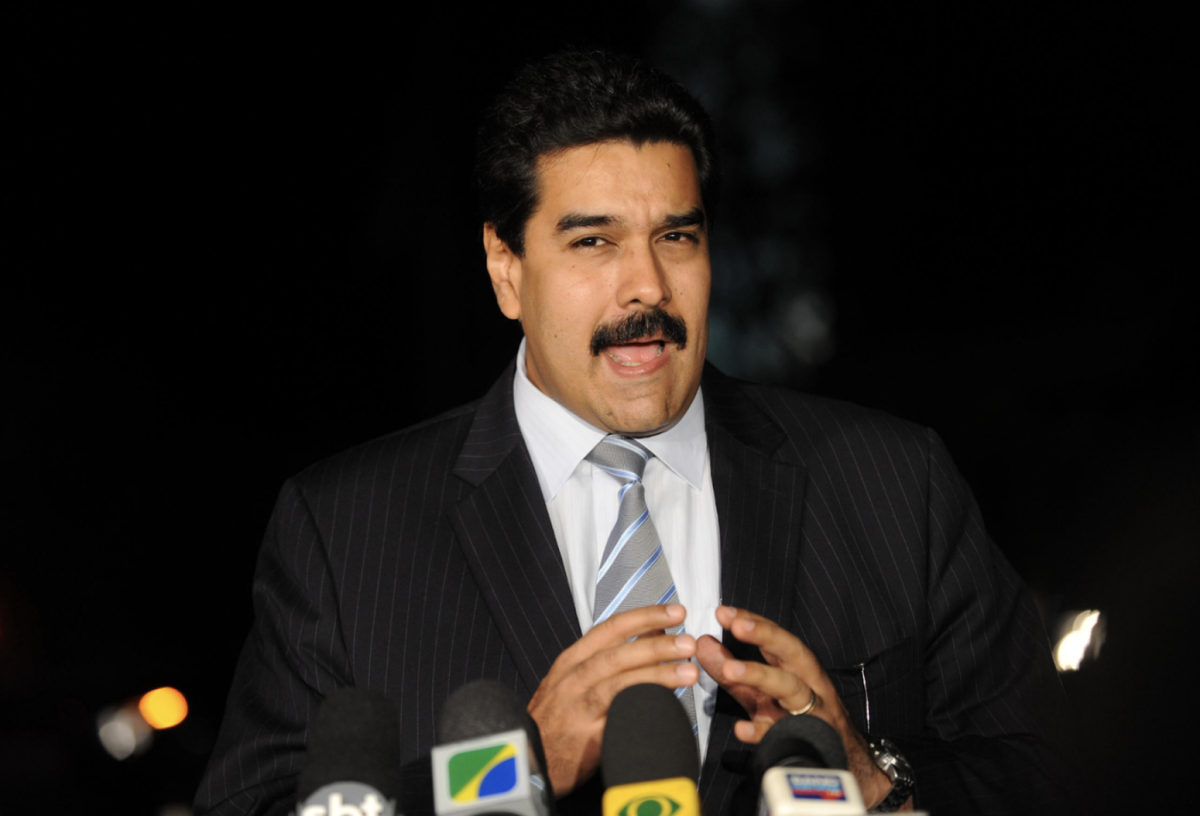
After a string of strikes on alleged Venezuela drug boats, the United States struck the Venezuelan capital, Caracas, on Jan 3, 2026 at 2:00 a.m. local time. The U.S. swept in with low-flying aircraft overnight and targeted a known total of five locations, including airfields and ports leading to the Caribbean Sea.
Shortly after the strikes began, a group of U.S. troops, including members of the Army’s special-forces unit Delta Force, rushed to Maduro’s home and compound. Breaking through, they managed to capture Maduro and his wife, Cilia Florez. Watching from his home in Florida among the CIA Director and U.S. Secretary of State, President Donald Trump remarked that it “was an incredible thing to see,” and that it was “an amazing thing, an amazing job these people did.”
No U.S. soldiers were killed, but a few were injured. It is unknown exactly how many Venezuelans died in the attack. On Jan 8, Venezuela’s interior minister Diosdado Cabello stated that over 100 Venezuelans had died in the attack. Diosdado Cabello himself stands in uncertainty in the aftermath, his position of power being in question with Maduro’s capture.
Venezuelan officials and Cuba have corroborated that a large part of Maduro’s security force, which was made up of a majority Cubans, died. Cuba set an estimate of the dead security officers at 32.
After his capture, Maduro and his wife were flown out of Venezuela on a plane to New York, where they were brought before a court and charged with narco-terrorism. They both pleaded not guilty before being taken to the Metropolitan Detention Center in Brooklyn, where they currently remain, awaiting a trial in March.
Why did the U.S. attack Venezuela?
Trump has accused Venezuela of smuggling in large amounts of illegal drugs into the U.S. late last year, the U.S. struck multiple boats allegedly carrying pounds of illicit substances but this has not been confirmed.
The Trump Administration announced it would be seeking a U.S. led regime change. Not only that, but Trump has spoken of an interest in Venezuela’s large oil reserves.
“We’re going to have our very large U.S. oil companies, the biggest anywhere in the world, go in, spend billions of dollars, fix the badly broken infrastructure, the oil infrastructure, and start making money for the country,” Trump stated in a press conference on the 3rd.
Venezuela has the world’s largest proven oil reserves, at 300 billion barrels. But most of this is crude, which means it has to be processed before it can be used for commercial functions. Despite this, Venezuela’s oil reserves are an alluring prize.
The U.S.’s strike on Venezuela and capture of Maduro has caused reactions worldwide, including from our own school. Sage Creek’s history and government teacher, Mr. Cordell had his own thoughts on the situation, “My prediction is that we, as a nation, will one day look back as students of history and view this as a turning point in U.S. foreign policies.”
“The dramatic capture of Maduro appears to challenge international norms and laws, as well as raising some legitimate questions about the constitutionality of this action,” he said. “It is impossible to say what exactly the long term ramifications are going to be, but history suggests that outcomes are likely to be much different than the hoped for and intended outcomes.”
One of the most controversial aspects of the event was that Trump authorized the attack without prior congressional approval, which is required by the War Powers Resolution of 1973. The senate passed a procedural vote that would block Trump from engaging in any more military action in Venezuela. This means that if the vote were to come to the Senate, there would be sufficient supporters to pass it.
Democratic activist and newly elected New York City mayor, Zohran Mamdani, disapproved of the strikes, stating that “Unilaterally attacking a sovereign nation is an act of war and a violation of federal and international law.”
While Mamdani strongly disapproved of the actions taken by the military under President Trump’s command, Secretary of Defense/War, Pete Hegseth, strongly supported the actions: “What we saw last night was sheer guts and grit, gallantry and glory of the American Warrior.” He continued, saying “Nicolas Maduro had his chance, like Iran had their chance, until they didn’t. They effed around and found out.” He said in a press debriefing.
While Nicolas Maduro might have been a sovereign leader of a country, his position and actions have been questioned both morally and politically for years. Taking power in 2013 after Hugo Chavez’s death, Maduro’s presidency was colored by human rights abuses that targeted political opponents. Not only that, but his 2018 and 2024 election win’s legitimacy are hotly debated, with the U.S. not recognizing his victories and declaring him an illegitimate president.
Others, like democratic representatives Jim Himes and Adam Smith, believed that the attacks may have breached International law through the UN charter in interviews, stating their views on CBS and CNN respectively. Article 2(4) of the UN charter declares: “All members shall refrain in their international relations from the threat or use of force against the territorial integrity or political independence of any state, or in any other manner inconsistent with the purposes of the United Nations.”
Because of this, U.S. actions have caused serious worry, especially considering that Venezuela has been a part of the UN since 1993. Despite Maduro potentially being a dictator, the actions of the U.S. may have breached international law.
European leaders have largely been reserved with their statements. The major sentiment that European leaders gave is represented well by the words of Ursula Von Der Leyen, the president of the European Commission, “Following very closely the situation in Venezuela. We stand by the people of Venezuela and support a peaceful and democratic transition.”
Other than that, most European leaders have taken a somewhat neutral stance. So why the restrained response? The U.S. backing of Ukraine and the security of its capital Kyiv is seen as vitally important, and European leaders have attempted to not anger Trump, which might trigger the end of support.
Other leaders from around the world have reacted to the situation. Their reactions, reflecting the U.S.’s own split nature, have been varied. Israeli Prime Minister Benjamin Netanyahu, congratulated Trump, saying in an X post, “Congratulations, President @realDonaldTrump for your bold and historic leadership on behalf of freedom and justice. I salute your decisive resolve and the brilliant action of your brave soldiers.”
Argentina’s president celebrated the end of Maduro’s regime, saying, “What we have to understand is that it’s the collapse of the regime of a dictator that was rigging elections, that in the last election was badly defeated and, despite that, he clung on to power. That’s why I’d say that today’s news is excellent news for the free world.”
The Chinese Foreign Ministry said, “China is deeply shocked and strongly condemns the use of force by the U.S. against a sovereign country and the use of force against the president of a country.”
Similarly, Brazil’s president said, “Attacking countries in flagrant violation of international law is the first step toward a world of violence, chaos, and instability, where the law of the strongest prevails over multilateralism.”
So what happens next?
As previously stated, Maduro’s trial will start in March 2026, with him taking the stance of non-guilty to the narco-terrorism crimes he’s been charged with. Venezuela, although having their leader captured and stripped of power, still has a strong top leadership who are celebrating Maduro’s deposition.
Former vice-president Delcy Rodriguez was sworn in as interim president who is now leading the country to maintain stability in the region. In opposition to the current interim government stands Maria Corina Machado, a Nobel Peace Prize winner and respected leader by many Venezuelans. She hopes to lead a peaceful transition for Venezuela. Machado praised the operation and gave her Nobel Peace Prize to Trump on Thursday the 15th. The U.S.’s full plans for Venezuela are as yet unknown, leading to uncertainty.
In wake of the attack on Venezuela, Trump has made statements concerning multiple other countries, including Cuba, Colombia and Greenland. “Colombia is very sick too, run by a sick man,” Trump said to a reporter.
Republican Senator Lindsay Graham added in response to a reporter’s question, “Cuba is a communist dictatorship that’s killed priests and nuns. They’ve preyed on their own people. Their days are numbered.”
Trump also mentioned Greenland, stating in the same interview that, “We need Greenland from a national security standpoint. Right now Greenland is covered with Russian and Chinese ships all over the place.”
The leaders of France, Germany, Italy, Poland, Spain and the United Kingdom released a statement with the Danish Prime Minister, saying, “Greenland belongs to its people, It is for Denmark and Greenland and them only, to decide on matters concerning Denmark and Greenland.”
The attacks have proven to be decisive and polarizing. The futures of Venezuela and Greenland, among others, have not been set in stone, causing apprehensiveness and fear around the world. Europe and the rest of the world waits in bated breath for Trump’s and the U.S’s next move on the world stage. The only thing we can do is wait and see.