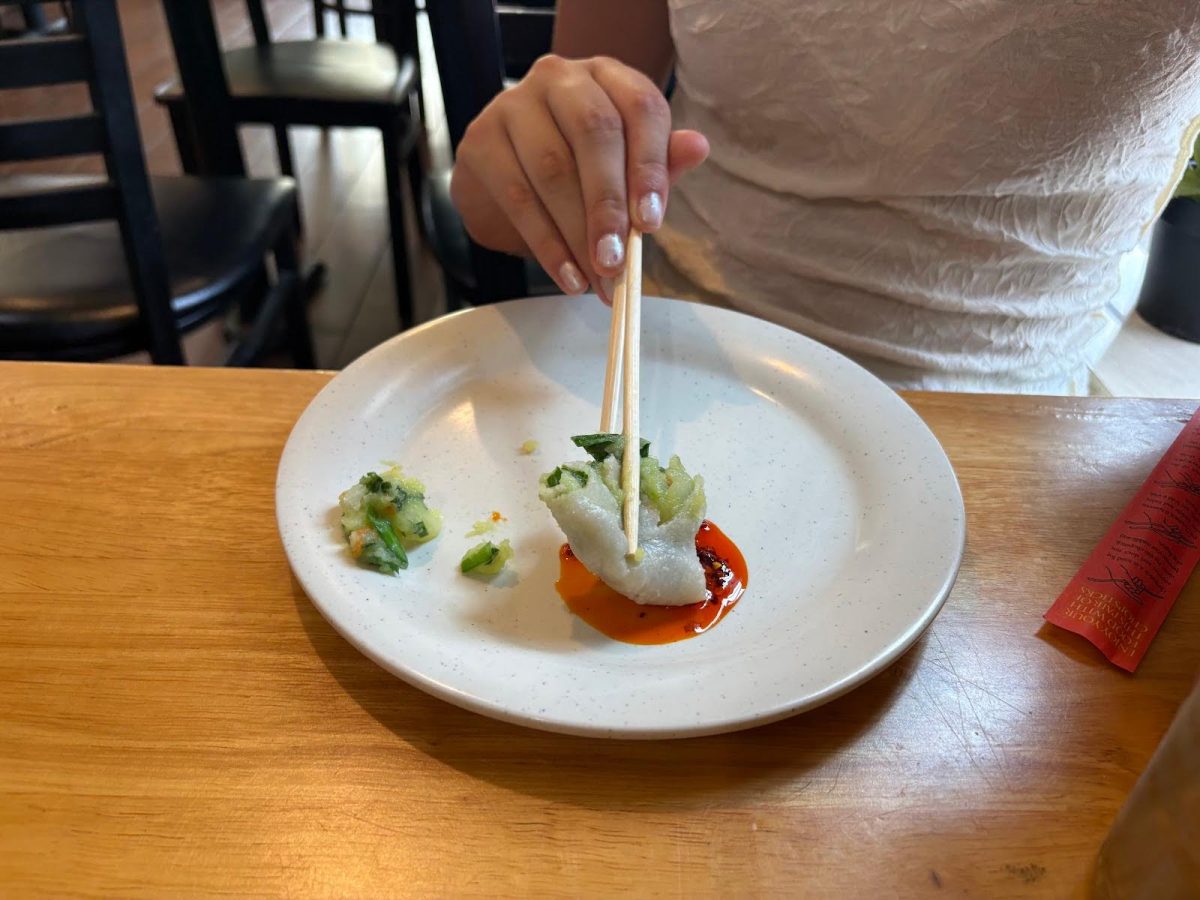
JACKSON HEIGHTS, QUEENS– Whether the weather is blistering or frigid, a fresh plate of steaming hot momo is rarely turned down here, where this Himalayan dumpling dish has dominated the food scene for nearly 20 years.
The simple combination of flavorful meat and minced vegetables wrapped in dough – steamed or fried – is not only bringing Himalayan natives a taste of home, but also drawing in a new audience.
With over 160 languages spoken and a 60% immigrant population, Jackson Heights is considered one of the most diverse neighborhoods in New York City. In the last 30 years, the Nepalese population has increased significantly, tripling between 2010 and 2019, and now remains around 16,000. Throughout this time, a variety of Nepali owned businesses and delicacies have stood as one of the most prominent parts of the neighborhood.
Sonam Gurung, a Nepali immigrant and cafe owner in Jackson Heights, has watched his culture flourish since moving here in 2010.
“The Nepali culture has grown so much,” said Gurung. “If you walk and bump into someone that’s a Nepali person.”
Following the Nepalese Civil War in the late 1990s, many citizens fled to America in search for a better life under the Diversity Immigrant Visa Program. Now, as of 2023, around 225,000 Nepali people reside in America, with New York having the second highest population after Texas. In 2004, Himalayan Yak opened as the first Nepali owned restaurant, marking the beginning of what would become a cuisine staple for the area.
Over 20 years later, momo trucks and restaurants line the blocks of Roosevelt Avenue, the main street of Jackson Heights, exemplifying how relevant the dish has become for the community.
“It’s just like dumplings are so easy, you know, like you just go and if you’re hungry, you grab it and eat it,” said Shambhu Buri, a server at Aama’s Kitchen, a Nepalese restaurant along Roosevelt Ave.
The ability to eat momo on the go or around the table makes it ideal for New York’s fast paced atmosphere – easy to grab and enjoy. Along with its quick accessibility, momo also can be made with a variety of different meats and flavors, making it versatile and broadly appealing to a variety of people. While momo may seem like just a quick and easy meal, it holds a more deep cultural meaning in Nepal.
The dish, originally Tibetan, eventually made its way into Nepali homes in the Kathmandu Valley, serving as a novelty delicacy before becoming a central part of the local culinary landscape. Today, momo is often a fixture in festivals and other special occasions, serving as a vessel for connection in the Nepali culture.
“Whenever I go to the restaurant to have momo and something like that, I see the people from my country,” said Syn Gurung, an international student from Nepal studying at LaGuardia Community College. “I don’t feel lonely.”
The connection momo provides allows people to reminisce on foods that shaped their childhood, as well as show those foods off to others. Meredith Barber, a former resident of Jackson Heights, believes diversity in this area cultivates a rich local cuisine for everyone.
“Jackson Heights is the epicenter of some of the best ethnic foods in the city,” said Barber. “There’s really no other place like Jackson Heights.”
This sentiment has been reflected online as the dish has become particularly popular on social media apps such as TikTok and Instagram, making momo a tourist attraction in New York.
Justin Wu, a viral New York City food content creator that participated in Jackson Heights’ annual Momo Crawl, explains why the dish pulls crowds from all over.
“Many people enjoy momo because of their delicious filling! Plus, there are different kinds of momo like fried vs. steamed momo and Jhol momo,” said Wu.
For the last 13 years, Students for a Free Tibet have organized The Momo Crawl, where more than 1,000 participants gather into Jackson Heights, exploring different momo restaurants and trucks at a discounted price with a “momo passport.” This event showcases the diverse palate that these businesses have to offer as well as promotes immigrant-owned restaurants to residents and visitors.
Aama’s Kitchen participated in The Momo Crawl in September, and Buri sees how the event exposes the dish and culture to new and wider audiences.
“The visitors are not only, like regular Momo eaters,” said Buri. “There are people who never had or heard about Momo.”
Momo may just be a small dumpling, but in Jackson Heights it is so much more. For Buri, momo may have Asian roots, but its flavor and popularity doesn’t have borders – appealing to cultures across the world.
“You get a mix of everything.”